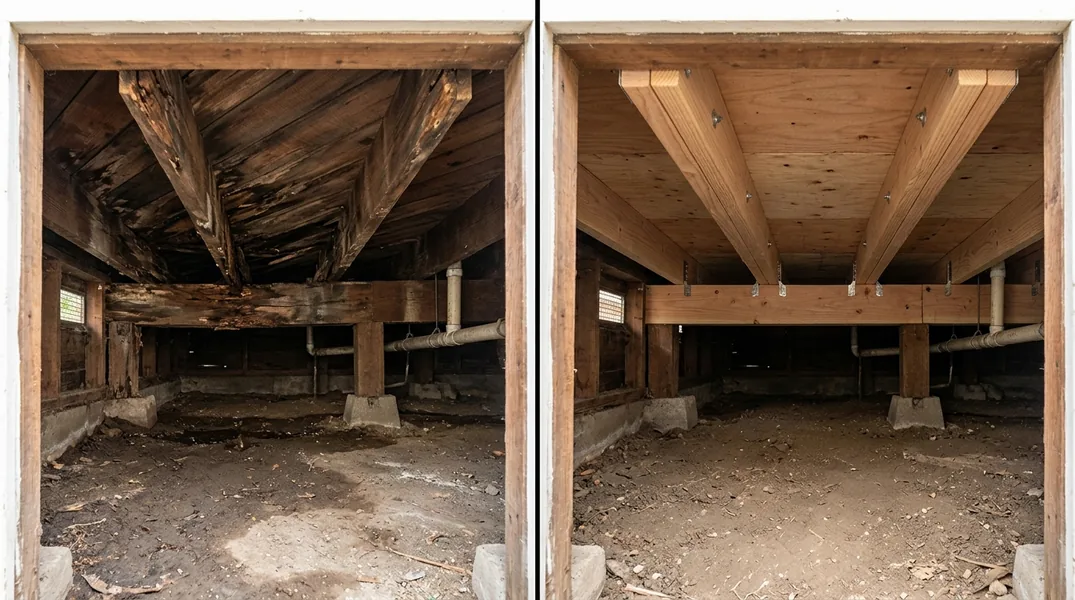
Why Your Santa Rosa Floor Is Sagging: Adobe Clay and Moisture
If you've noticed your hardwood floors dipping in the middle of a room or your doors jamming when they used to swing freely, you're experiencing one of the most common structural complaints we hear from homeowners in Santa Rosa. Sagging floors aren't just a cosmetic nuisance, they're a warning sign that your home's foundation and floor system are under stress.
The culprit in many Santa Rosa homes is a combination of two factors: the region's unique adobe clay soil and inadequate crawlspace ventilation. Adobe clay expands when wet and contracts when dry, creating constant movement beneath your foundation. Over decades, this cycle weakens the soil's ability to support your home evenly. Add in a poorly ventilated crawlspace where moisture accumulates, and you create the perfect environment for wood rot to develop in your floor joists. When the structural beams and joists that hold up your floors begin to decay, they lose their load-bearing capacity, and your floors start to sag.
How Floor Joists Fail: Wood Rot, Termites, and Structural Decay
Your floor joists are the horizontal beams that span between support posts and bearing walls, holding up your subfloor and everything on top of it. They're engineered to carry a specific load, but when moisture, pests, or age compromise their integrity, that capacity drops dramatically. Wood Rot & Dry Rot Repair is one of the most common reasons joists fail in older Santa Rosa homes. Dry rot, in particular, can silently destroy the interior of a joist while the exterior still looks sound, reducing its strength by 50 percent or more.
Termite Damage Repair is another major culprit. Subterranean termites tunnel through wood, creating hollow galleries that weaken the joist from within. Unlike rot, which is fungal decay, termite damage is active and ongoing. The insects continue feeding until the wood is essentially honeycomb and useless for load-bearing. A joist that looks solid from above might be 70 percent compromised inside, unable to handle the weight of your home. This is why a professional inspection is so important, because sagging floors often mean multiple joists have already failed.
Sagging Floor Repair: Sistering Floor Joists and Reinforcement
When we diagnose a sagging floor, the solution depends on the severity and cause of the damage. For joists that are weakened but not completely destroyed, Floor Joist & Subfloor Repair using a technique called sistering is often the most cost-effective and least invasive option. Sistering means installing a new, healthy joist alongside the damaged one, bolting them together so they act as a single, stronger unit. The new joist shares the load with the compromised one, restoring the floor's ability to support weight.
For more severe cases where joists are extensively rotted or termite-damaged, full replacement may be necessary. This involves carefully supporting the floor above with temporary posts and beams, removing the failed joist, and installing a new pressure-treated or engineered joist in its place. In some situations, if multiple joists have failed or if the damage extends to the main support beam, Beam Replacement & Load-Bearing Wall Removal work may be required. This is more involved and requires proper engineering and permits, but it's essential if your home's primary support structure is compromised.
The key to any successful repair is addressing the moisture source first. If you don't fix the crawlspace ventilation, drainage problems, or foundation issues that caused the rot or termite damage in the first place, the new joists will eventually fail too. That's why we always recommend a comprehensive assessment that looks at the whole picture, not just the visible damage.
Why Your Doors Stick When Floors Sag: The Domino Effect
Sticking doors are often dismissed as a minor annoyance, but they're actually a red flag for larger structural problems. When floor joists sag, the entire floor system settles unevenly. This movement throws door frames out of square. A door frame that was once perfectly plumb and level becomes twisted, causing the door to bind against the frame. You might notice the top corner of the door rubs while the bottom corner has a gap, or the door only sticks partway through its swing.
This same uneven settling can cause cracks in drywall, separation between walls and ceilings, and even cracks in foundation walls. These aren't cosmetic problems you can just paint over. They're structural signals that your home is moving, and the movement is likely getting worse. If you have both sagging floors and sticking doors in your home, the connection is almost certainly real, and you need a professional inspection to determine how much damage has already occurred and what repairs are needed to stabilize your home.
Getting a Professional Floor Inspection and Repair Estimate
Diagnosing the root cause of sagging floors requires hands-on inspection of your crawlspace, foundation, and floor system. During an inspection, we look for visible rot, termite mud tubes, standing water, inadequate ventilation, and structural damage. We measure the amount of sag using laser levels and check joist strength by probing with a screwdriver or moisture meter. We also assess your soil conditions, drainage patterns, and any previous repairs or modifications that might have compromised the structure.
Once we understand the full scope of the problem, we can recommend the most appropriate repair strategy and provide you with accurate pricing for the work. Sagging floor repairs can range from a few thousand dollars for sistering a couple of joists to significantly more if extensive rot removal and beam replacement are needed. The best way to understand your specific situation and costs is to schedule a free estimate with Santa Rosa Carpentry. We serve Santa Rosa and the surrounding area, and we're happy to inspect your home and give you a clear picture of what's happening beneath your floors.
If you've noticed sagging floors, sticking doors, or any signs of moisture or pest damage in your crawlspace, don't wait. The longer structural damage goes unrepaired, the more expensive and complicated the fix becomes. Call us today at (707) 543-1462 or visit our website to request your inspection.
Preventing Future Floor Damage: Crawlspace Maintenance and Moisture Control
Once your sagging floors have been repaired, the best investment you can make is preventing the problem from happening again. Proper crawlspace ventilation is essential. Your crawlspace should have vents that allow air to circulate, reducing humidity and moisture buildup. In some cases, a vapor barrier on the soil and proper grading around your foundation will help keep water from pooling beneath your home.
Regular inspections, at least once a year, can catch early signs of rot or termite activity before they become structural emergencies. Look for soft spots in floor joists, visible mold, standing water, or mud tubes on posts. Address any foundation cracks, roof leaks, or plumbing leaks promptly, as these are common sources of crawlspace moisture. By staying proactive about moisture control and structural maintenance, you can extend the life of your home's framing and avoid the costly repairs that come with advanced rot or pest damage.
Looking for a professional carpentry contractor in Santa Rosa? Santa Rosa Carpentry responds fast for all your carpentry needs.
Get a Free QuoteOur services: Wood Rot & Dry Rot Repair · Termite Damage Repair · Floor Joist & Subfloor Repair