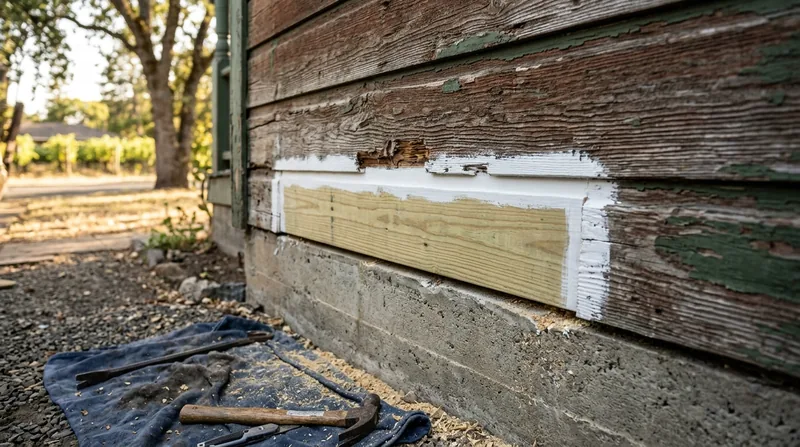




Santa Rosa's winter atmospheric rivers, foggy mornings and creek-side dampness create ideal conditions for wood rot and dry rot repair work. The city's Victorian cottages along McDonald Avenue, 1910s bungalows near Burbank Gardens, post-war ranches in Roseland and Montecito Heights, and the newer Coffey Park and Fountaingrove rebuilds all sit vulnerable to the same moisture pathology: long, dry summers bake south and west-facing fascia and trim, then winter storms soak siding bottoms, sills and porch posts, and persistent marine fog keeps shaded wood damp for weeks at a stretch. We cut out decayed framing, siding and trim, treat surrounding wood with care, and rebuild with rot-resistant lumber. This is a permanent repair, not a cosmetic patch. When wood justifies it, we save the structure. When replacement is the honest answer, we say so.
Why Wood Rot and Dry Rot Repair Matters in Santa Rosa's Older Homes
Santa Rosa's raised-foundation Victorians and Craftsman cottages were built to shed water, but 100 years of settling, weather exposure and deferred maintenance have opened seams. The adobe clay soil beneath many Santa Rosa homes swells in winter and shrinks in summer, pulling floors and doors out of level and stressing the sill plates and rim joists that hold the house to its foundation. Rot starts small, in hidden places, and spreads quietly through framing and substructure. Catching it early and making the repair right means decades of solid performance. Waiting until the damage is severe means replacing entire floor joists, beams or wall sections, a much bigger job and a much bigger bill.
- Identify soft spots in siding, trim, fascia and porch posts before decay reaches structural framing.
- Cut out decayed wood cleanly and treat the surrounding timber to stop the spread.
- Replace with pressure-treated or naturally rot-resistant lumber sized to the original specification.
- Restore flashing, caulking and drainage so the repair stays dry and lasts.
Early detection and repair prevent small rot from becoming structural failure.
Local example: A Victorian on McDonald Avenue with soft siding at the corner post and a rotted sill plate discovered during a crawlspace inspection. We cut out the decayed sill section, sistered in new pressure-treated lumber, and sealed the band board. The repair took two days and cost a fraction of what a full rim joist replacement would have. The house stays level and dry.
For more context on structural wood damage, see our page on termite damage repair in Santa Rosa, which often accompanies rot in older raised-floor homes.
California's Division of Labor Standards Enforcement publishes guidance on contractor licensing and scope of work at dir.ca.gov. Permits for structural carpentry work are required in Santa Rosa and must be verified with your local building department.
How We Repair Wood Rot and Dry Rot in Santa Rosa Homes
Our process starts with a hands-on inspection. We probe suspect areas with a sharp tool, photograph the damage, and explain what we find in plain terms. If the rot is confined to trim or siding, we remove and replace just that section. If it has reached framing, we assess the structural role of that piece, the extent of decay, and whether repair or replacement is the honest call. We work from your own pest inspection report if termites are involved, and we coordinate with your general contractor or insurance adjuster if the damage is part of a larger claim.
- We inspect the damage on site and take photographs to document the scope and extent.
- We remove decayed wood using hand tools and careful cutting to preserve sound structure.
- We treat exposed wood with a wood preservative to halt further decay in surrounding timber.
- We install new lumber, flashing and caulk to restore weathertightness and prevent moisture re-entry.
- We match species, grain and finish where the repair is visible, and stain or paint to blend with the original.
The repair is complete when the wood is dry, protected and structurally sound again.
Local example: A 1960s ranch in Rincon Valley with soft fascia and soffit boards on the north side, kept damp by marine fog and a clogged gutter. We removed the decayed fascia, treated the rafter ends, installed new fascia and improved the gutter slope. The repair took one day and cost $1,200. The homeowner avoided a full roof-edge rebuild.
If rot extends into floor joists or subfloor, we may recommend floor joist and subfloor repair as a complementary scope. For large structural beams or load-bearing walls affected by decay, beam replacement and load-bearing wall work may be necessary and will require a structural engineer and permit.
| Approach | Description | Best for |
|---|---|---|
| Localized trim and siding repair | Remove decayed boards or trim, treat surrounding wood, install new lumber and finish to match. | Soft fascia, rotted siding boards, window sills and porch trim with decay confined to the surface. |
| Sill plate and rim joist repair | Cut out decayed sill or rim sections, sister new pressure-treated lumber, restore flashing and drainage. | Rot at the foundation line where siding meets the crawlspace, common in older raised-floor homes. |
| Post and beam repair | Remove decayed portions of porch posts, deck posts or structural beams, sister or replace with rot-resistant lumber. | Soft porch posts, deck posts and lower beam ends exposed to standing water or ground contact. |
| Full member replacement | Remove entire decayed stud, joist, rafter or beam and install new pressure-treated or engineered lumber. | Decay too extensive to repair safely, or structural member too weakened to carry load as is. |
Wood Rot and Dry Rot Repair Cost in Santa Rosa: What to Expect
A small localized repair, like a rotted fascia board or soft window sill, runs from $650 to $1,200 and takes a day or less. A larger job, like a decayed sill plate section or multiple porch posts, runs $1,500 to $3,500 depending on the length of the repair and how much surrounding wood needs treatment. Full member replacement or repairs that involve structural framing require an on-site estimate because labor, material and permit costs vary widely based on what we find.
The main factors that affect cost are the extent of decay, whether the damage has reached structural framing, the species and size of the lumber being replaced, and access to the damage. A rotted post in an open crawlspace costs less to replace than a rotted sill plate under a load-bearing wall. A single soft board costs less than sistering a new joist alongside a decayed one.
Get estimates from two or three carpenters so you can compare scope, price and timeline. A good estimate explains what wood is being removed, what's being replaced, what treatment is being applied and why, and whether permits are needed. See our full pricing overview for more detail on how we structure estimates and what's included at each price point.
Hiring a Wood Rot and Dry Rot Repair Carpenter Near Me in Santa Rosa
When you're looking for a carpenter near you in Santa Rosa or the surrounding area, focus on three things: whether the contractor is fully insured, whether they can explain the damage clearly and propose a realistic repair plan, and whether they're willing to get a permit if the work is structural. A good carpenter will walk you through the inspection, show you the rot, explain why the repair matters, and give you a clear estimate before starting work. They should be able to handle insurance documentation if your claim covers the damage.
- Verify that the contractor is fully insured and carries general liability and workers compensation.
- Ask for references from recent jobs in Santa Rosa and follow up with at least two homeowners.
- Request a written estimate that details what wood is being removed, what's being installed and the timeline.
- Confirm that the contractor will pull any required permits for structural work or alterations to load-bearing members.
- Check whether your homeowners insurance or HOA has any restrictions on materials or contractors for this type of repair.
A local carpenter who knows Santa Rosa's climate, soil and building stock will save you money and headache.
Ready to get started? Contact us for a free estimate at (707) 543-1462. We respond within 24 hours and there's no obligation to book.
Wood Rot & Dry Rot Repair in Santa Rosa: Pricing Guide
| Service | Price | Details |
|---|---|---|
| Localized trim or siding repair | Starting at $650 | Soft fascia, rotted siding board or window sill, one day labor plus materials and finish |
| Medium repair: sill plate, posts or multiple boards | Starting at $1,500 | Decayed sill section, porch post or fascia spanning multiple feet, includes treatment and pressure-treated replacement |
| Structural repair: joists, beams or full member replacement | On estimate | Extent of decay, access, load-bearing role and permit requirements must be assessed on site before pricing |
| Travel and site visit | Included | No separate mileage or call-out fee within Santa Rosa and surrounding service areas |
| Estimate and inspection | Free | On-site inspection, photographs and written estimate within 24 hours, no obligation to book work |
Indicative pricing, the exact cost depends on square footage, finish, and site access. Free personalized estimate within 24h at (707) 543-1462.


