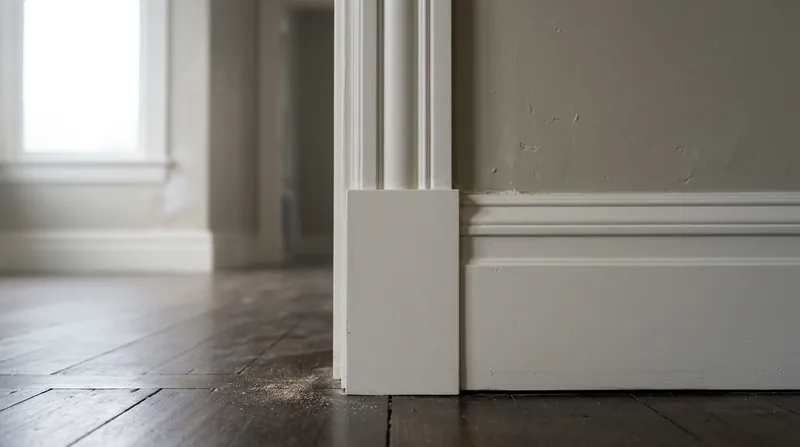




Finish & Trim Carpentry in Santa Rosa demands precision and an eye for detail that separates real carpentry from rough framing or handyman work. Santa Rosa's residential stock spans Victorian mansions along McDonald Avenue, 1920s Craftsman bungalows in the West End historic district, post-war ranches across Montecito Heights and Roseland, and the 2018-2022 rebuilds of Coffey Park and Fountaingrove. Each home type calls for trim work that respects its era and sits flush to the wall, with tight miters, scribed joints and consistent reveals that catch the light right. Winter atmospheric rivers and morning marine fog through the Petaluma Gap keep interior trim exposed to seasonal moisture swings, and long dry summers bake south and west-facing casings. We handle casing, crown molding, baseboard, wainscoting, paneling and custom trim throughout Santa Rosa homes, old and new, working to tolerances that show.
Why Finish & Trim Carpentry Matters in Santa Rosa's Historic and Modern Homes
Trim and casing are not decorative afterthoughts. They conceal gaps between framing and drywall, protect wall edges from damage, frame doorways and windows, and set the visual character of a room. In Santa Rosa's older homes, original Douglas fir or redwood trim has held up for a century because the wood was dense and the joinery was tight. Modern trim work must meet that standard: a scribed baseboard that follows an out-of-level floor, a crown molding coped joint that sits perfectly at an inside corner, or door casing that reveals consistently on all four sides. Poor trim work shows immediately and costs money to fix. Getting it right the first time matters.
- We measure and cut casing and trim on-site to fit the actual wall, not a nominal dimension.
- Miter joints are cut and fitted for a tight, gap-free appearance that holds finish paint or stain evenly.
- Coped joints at inside corners are cut to follow the profile perfectly, so no gap opens as wood moves with seasonal humidity.
- Reveals are consistent across all trim in a room, maintaining visual rhythm and professional proportion.
- We work with redwood, Douglas fir, pine, and hardwoods, selecting species and grain to match existing trim or the home's era.
Trim work that fits tight, finishes clean, and lasts decades is the mark of a carpenter, not a helper with a miter saw.
Local example: A 1925 Craftsman bungalow in the St. Rose district had mismatched casing around interior doors added in the 1980s. We removed the modern trim, sourced quarter-sawn Douglas fir to match the original grain and color, and installed new casing with mortise-and-tenon joinery at the miters. The result reads as original, and the joints will not open as the house settles.
For more on how we approach interior woodwork and custom solutions, see our Custom Built-Ins & Shelving page, which covers similar precision joinery in a different context.
How We Handle Finish & Trim Carpentry: From Measurement to Installation
Finish carpentry begins with accurate measurement and ends with a piece that fits the space exactly. We do not cut trim to nominal dimensions and expect it to work. We measure the actual wall, account for out-of-plumb studs and out-of-level floors, and cut each piece on-site or in our shop to the real geometry of the room. Crown molding, baseboard, casing and custom trim all follow this principle: measure once, cut twice, install once.
- We visit the site and measure all walls, door and window openings, and existing trim details in photographs and notes.
- We review the home's era and original trim species and profile, sourcing matching or complementary material from local mills or specialty suppliers.
- We cut casing, crown molding and baseboard to fit the actual wall, using a scribe or coped joint to handle out-of-plumb or out-of-level conditions.
- We install trim with finish nails or pocket screws, filled and sanded smooth, ready for paint or stain.
- We sand, fill nail holes and joints, and prepare the trim for finish. Paint or stain is typically applied by the homeowner or a separate painter.
This step-by-step process ensures that trim sits tight, reveals are even, and joints hold through seasonal wood movement.
Real project: A 1950s ranch home in Montecito Heights had a kitchen remodel that left raw drywall and open studs where cabinets met the wall. We installed 3.25-inch baseboard around the room, scribing the fit where the floor was high, and added crown molding at the ceiling line with coped joints at two inside corners. The homeowner then had the painter finish it to match the cabinet color.
If your trim work is part of a larger structural or custom project, see our page on Custom Built-Ins & Shelving or contact us for a site visit.
| Approach | Description | Best for |
|---|---|---|
| Casing & Baseboard | Door and window casing, base trim, and shoe molding, cut and fitted on-site to the actual wall plane and floor level. | Interior doors, windows, and room perimeters where precision fit and consistent reveals matter. |
| Crown Molding | Ceiling-line trim with coped inside corners and mitered outside corners, scribed to follow an out-of-level ceiling. | Formal rooms, kitchens, and living areas where crown adds visual height and frames the room. |
| Wainscoting & Paneling | Frame-and-panel or beadboard wainscoting, shiplap, or custom paneling installed over drywall or existing plaster. | Bathrooms, dining rooms, and vintage home restoration where texture and period detail are priorities. |
| Custom Trim & Millwork | Built-to-spec trim profiles, custom headers, and specialty molding sourced or milled to match existing details. | Historic restoration, high-end finishes, and homes where standard stock trim does not fit the era or design intent. |
| Repair & Refinishing | Removal of damaged or outdated trim, repair of split or warped casing, and refinishing to original color and grain. | Older Santa Rosa homes where original trim survives but needs repair, patching, or cosmetic restoration. |
Finish & Trim Carpentry Cost in Santa Rosa: What to Expect
Trim and casing work is priced by the linear foot or by the project, depending on complexity. A straightforward baseboard or casing installation in a single room runs from $550 to $1,200, depending on the trim profile, wood species, and how much scribing or coping the walls require. Crown molding, wainscoting, and custom millwork cost more because they demand precision joinery and often require material sourcing. The main cost drivers are the linear footage of trim, the wood species (redwood and hardwoods cost more than pine), how much site-specific fitting is needed, and whether you are repairing existing trim or installing new.
A room with out-of-level floors and out-of-plumb walls will need more scribing and coping, which takes time and skill. A room with plumb walls and level floors can be trimmed faster. Historic restoration work, where we match original profiles and grain, costs more than standard trim installation. We always provide a written estimate after a site visit, with no obligation to book. See our pricing page for more detail on what drives cost and how to get a free estimate.
Finish & Trim Carpentry Near Me: What Santa Rosa Homeowners Should Know When Hiring
Finding a finish carpenter who understands precision joinery and takes pride in tight fits is harder than it sounds. Many carpenters can frame a house or patch drywall, but trim work requires a different skill set and patience. When you are looking for a finish carpenter near Santa Rosa, check that the person has done trim work on homes similar to yours, can show examples of coped joints and mitered casing, and understands the difference between a tight fit and a gap that will open as the house moves. Ask for references from recent trim projects, and call at least two to ask if the work was done on time, if the trim sits tight, and if the carpenter cleaned up after the job.
Verify that the carpenter is fully insured and can provide a certificate of insurance. Ask whether the work will require a permit. For interior trim, permits are rarely required, but if you are removing or altering load-bearing walls to open up a room for trim work, a permit and possibly a structural engineer's input are necessary. Confirm your own local building department's rules before work begins. Get a written estimate that lists the trim to be installed, the wood species, the linear footage or room count, and the total cost. A good estimate also notes what the carpenter will do with old trim (remove and haul, or leave on site) and whether the price includes site cleanup.
We are a local carpentry shop, and the same carpenters who measure and plan your trim work will install it. We explain what we see, propose repair before replacement, and stand behind tight joints and clean finishes. Call us at (707) 543-1462 for a free estimate, with no obligation to book.
Finish & Trim Carpentry in Santa Rosa: Pricing Guide
| Service | Price | Details |
|---|---|---|
| Baseboard & Casing Installation | Starting at $550 | Single room with standard profile trim, cut and fitted on-site, includes finish nails and site cleanup. |
| Crown Molding Installation | Starting at $750 | Per room with coped inside corners and mitered ends, scribed to fit out-of-level ceilings, finish nails included. |
| Wainscoting & Custom Paneling | Starting at $1,200 | Frame-and-panel or beadboard wainscoting, installed over drywall, priced per linear foot of wall height. |
| Trim Repair & Refinishing | Starting at $400 | Removal of damaged casing, patching of split or warped trim, and preparation for paint or stain finish. |
| Historic Restoration or Custom Millwork | On estimate | Custom trim profiles, specialty wood species, and detailed joinery require site visit and material sourcing assessment. |
| Free Estimate | No charge | Site visit, measurement, material recommendations, and written quote within 24 hours, no obligation to proceed. |
Indicative pricing, the exact cost depends on square footage, finish, and site access. Free personalized estimate within 24h at (707) 543-1462.


