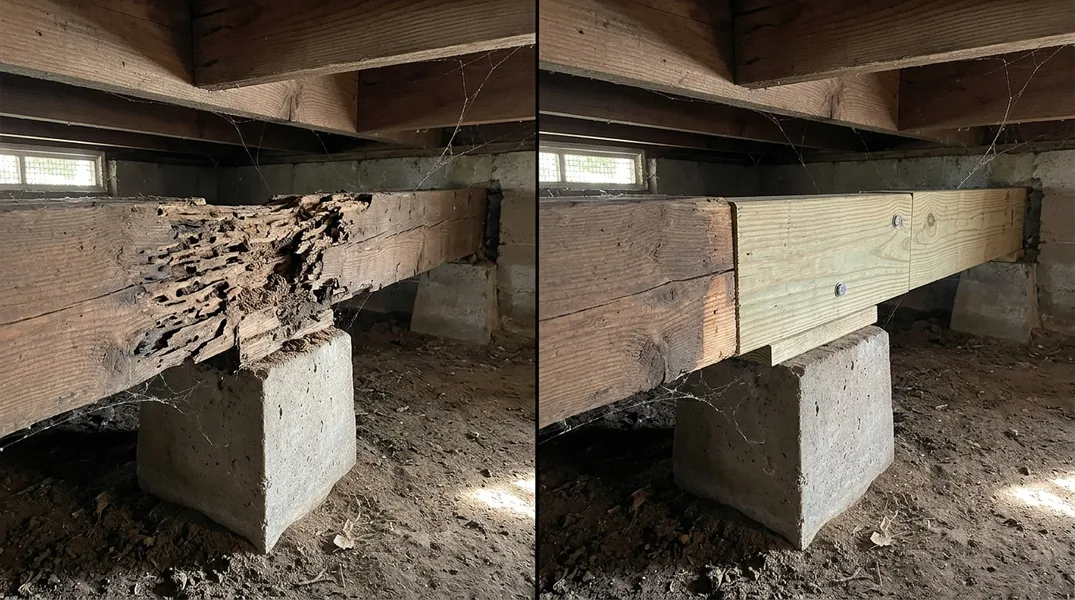
Understanding the Difference Between Wood Rot and Termite Damage
When you discover soft, discolored, or crumbling wood on your home, the first question is usually: what caused this? Wood rot and termite damage look similar to the untrained eye, but they require different repair approaches. Understanding the difference is essential before you decide whether to repair or replace affected areas.
Wood rot occurs when moisture penetrates wood and fungal spores begin to decompose the wood fibers from the inside out. Dry rot, despite its name, also requires moisture to develop. It spreads more aggressively than wet rot and can travel through masonry and other materials, making it particularly dangerous. Termite damage, by contrast, is caused by insects actively feeding on the wood structure. Termites leave behind hollowed-out galleries and may leave mud tubes on exterior surfaces. Both conditions weaken your home's structural integrity, but the treatment paths differ significantly.
When You Can Repair Rotted Wood Without Replacing
The good news is that not every instance of wood rot requires complete replacement. If the damage is caught early and is limited to a small surface area, repair rotted wood without replacing may be a viable and cost-effective option. Localized rot, particularly in non-structural elements like trim, fascia, or decorative beams, can often be treated by removing the affected wood, applying wood hardener, and patching with epoxy or new wood filler. This approach preserves the original character of your home while addressing the problem at a fraction of the cost of full replacement.
For Wood Rot & Dry Rot Repair to be successful without replacement, several conditions must be met. First, the rot must not have penetrated deeply into structural members. Second, the source of moisture must be identified and eliminated, or the rot will simply return. Third, the remaining wood must still retain sufficient strength to support its intended load. A qualified carpenter in Santa Rosa can assess whether your situation qualifies for repair or demands replacement by probing the wood, checking moisture levels, and evaluating structural impact.
When Full Replacement Becomes Necessary
Extensive wood rot, particularly in structural components, almost always requires replacement rather than repair. If the rot has compromised more than 30 percent of a beam, joist, or load-bearing wall, the wood has likely lost too much structural capacity to be safely repaired. Similarly, if dry rot has spread across a large area or has begun traveling through your home's framing, replacement is the only reliable solution. Attempting to repair severely compromised wood puts your family at risk and can lead to catastrophic failures down the road.
Structural elements like Floor Joist & Subfloor Repair situations often fall into the replacement category because these components bear the weight of your entire home. If floor joists are rotted, sagging, or severely damaged by termites, they must be replaced to restore proper support and prevent floors from collapsing. The same applies to siding, rim joists, and other critical framing members. When you need to replace rotted wood siding or structural beams, working with an experienced contractor ensures the work meets building codes and restores your home's safety and value.
Termite Damage Repair: A Specialized Challenge
Termite Damage Repair presents unique challenges because termites often cause damage that extends far deeper than what's visible on the surface. Unlike wood rot, which typically shows itself through soft spots and discoloration, termite galleries can honeycomb through wood for months or years before becoming apparent. By the time you notice the damage, termites may have already compromised multiple structural members throughout your home. This is why termite damage almost always requires professional inspection and often necessitates replacement of affected wood rather than repair.
The decision to repair or replace termite-damaged wood depends on the extent of infestation and the structural importance of the affected member. Minor surface damage in non-structural wood trim might be repairable, but damage to beams, joists, or load-bearing walls almost always demands replacement. Additionally, any termite damage repair must be accompanied by pest control treatment to eliminate the active infestation. Without addressing the termite population, any repairs you make will simply be damaged again. This is why it's critical to involve both a qualified carpenter and a pest control professional when dealing with termite issues in your Santa Rosa home.
Wood Rot & Dry Rot Repair Cost in Santa Rosa: What to Budget
Understanding wood rot repair cost is crucial for homeowners making repair versus replace decisions. The pricing for wood rot repair varies dramatically based on severity, location, and whether structural members are involved. Small surface repairs might cost between $300 and $800, while extensive repairs involving multiple joists or beams can easily exceed $3,000 to $5,000 or more. Full replacement of structural elements like Beam Replacement & Load-Bearing Wall Removal can range from $2,000 to $10,000 or beyond, depending on the scope and complexity of the work.
Several factors influence the final cost of your repair project. The location of the damage matters significantly, as wood rot in crawl spaces or attics is generally less expensive to access than rot in walls or structural elements. The type of wood also affects pricing, as replacing specialty materials or matching existing wood species can increase costs. Labor intensity is another major factor, particularly if the work requires temporary structural support, removal of other materials to access the rot, or coordination with other trades. Rather than guessing at costs, the best approach is to get a free estimate from Santa Rosa Carpentry. Call us at (707) 543-1462 to schedule an inspection and receive an accurate assessment of your repair needs and costs.
Making the Repair or Replace Decision: A Practical Framework
So how do you actually decide whether to repair or replace? Start by having a professional inspection performed. A qualified carpenter can determine the extent of damage, test moisture levels, and assess whether the wood retains sufficient structural integrity. They can also identify the source of moisture that caused the rot in the first place. Without addressing moisture issues, any repair will be temporary. If the inspection reveals that moisture is coming from a leaking roof, poor drainage, or damaged gutters, those problems must be fixed regardless of whether you repair or replace the wood.
Consider the age and condition of the affected component. If a piece of wood is 50 years old and showing rot, replacement may be more economical than repair, since the repaired wood might fail again within a few years. Conversely, if damage is truly localized and the wood is otherwise sound, repair makes sense. Think about the location and visibility of the damage too. Rotted trim on a visible wall might warrant replacement to restore the home's appearance, while rot in a hidden structural member might be repairable if it's caught early. Finally, weigh the cost difference. If repair and replacement costs are similar, replacement is often the better choice for peace of mind and longevity. Santa Rosa Carpentry specializes in both repair and replacement solutions, and we'll give you honest advice about which option makes the most sense for your specific situation. Contact us today at (707) 543-1462 for a thorough evaluation.
Looking for a professional carpentry contractor in Santa Rosa? Santa Rosa Carpentry responds fast for all your carpentry needs.
Get a Free QuoteOur services: Wood Rot & Dry Rot Repair · Termite Damage Repair · Floor Joist & Subfloor Repair