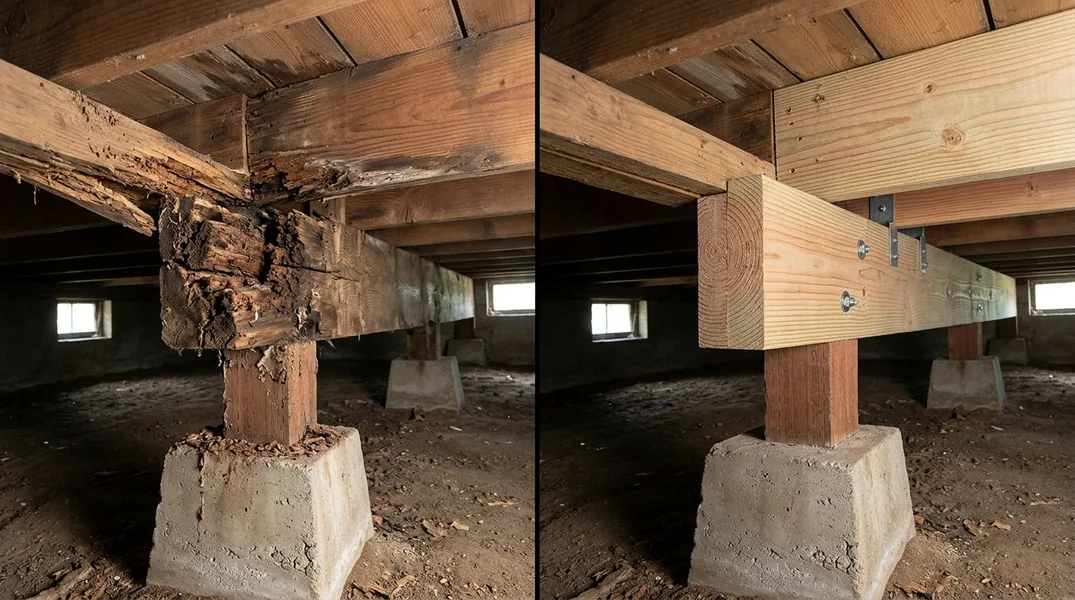
Dry Rot vs Termite Damage: Understanding the Difference
If you own a home in Santa Rosa, you've likely heard warnings about wood rot and termite damage. Both can compromise your home's structural integrity, but they develop through entirely different mechanisms. Understanding the distinction is crucial because the repair approach, timeline, and cost differ significantly between the two.
Dry rot is a fungal disease that attacks wood when moisture levels remain elevated (typically above 20 percent). Unlike its name suggests, dry rot thrives in damp conditions and spreads through airborne spores. Termite damage, by contrast, results from active insect infestation. Termites consume wood as a food source and create tunnel networks as they burrow through structural members. Misidentifying which problem you have can delay treatment and allow damage to worsen, so it's essential to know what signs to look for before calling in a professional for Wood Rot & Dry Rot Repair or Termite Damage Repair.
What Does Wood Rot Look Like? Visual Signs of Dry Rot
Dry rot presents several distinctive visual characteristics that can help you identify it before major structural damage occurs. The most obvious sign is discoloration: affected wood often turns dark brown or reddish-brown, sometimes with a silvery-gray appearance on the surface. The wood may also develop visible cracks that form a distinctive cubic or blocky pattern, as the fungus breaks down the wood's cellular structure in a particular way. This cracking pattern is one of the most reliable identifiers of dry rot and rarely appears with termite damage.
Another telltale sign is the texture and consistency of the wood itself. When you probe affected areas with a screwdriver or similar tool, dry rot wood crumbles easily and feels brittle, almost like it might disintegrate in your hands. You may also notice a musty, earthy odor emanating from the affected area, which indicates active fungal growth. In advanced stages, the wood shrinks noticeably and may become so weakened that it loses its structural capacity. If you spot these characteristics in your Santa Rosa home, particularly in basements, crawl spaces, or around windows and doors where moisture accumulates, you should schedule a professional inspection promptly.
Signs of Termite Damage in Wood: What Homeowners Should Know
Termite damage looks distinctly different from dry rot, though both can cause serious structural problems. The most characteristic sign of termite activity is the presence of hollow galleries or tunnels running through the wood grain. Termites eat wood from the inside out, often leaving a thin outer shell intact while hollowing out the interior. This means wood infested with termites may appear normal on the surface but crumble when pressure is applied. Unlike dry rot's cubic cracking pattern, termite damage typically creates smooth, clean tunnel walls.
Other visible indicators include mud tubes, which termites construct along foundation walls and structural supports to maintain moisture and protection as they travel. These pencil-thin tubes are often brown or tan and run vertically up concrete or masonry. You might also notice discarded termite wings near windowsills or light fixtures, as swarming termites shed their wings after finding a mate. Wood damaged by termites often appears blistered or bubbled on the surface, and you may hear a faint clicking or rustling sound if you place your ear near heavily infested areas. The damage pattern tends to follow the grain of the wood more predictably than dry rot. If you suspect termite activity, professional Termite Damage Repair assessment is critical because termite colonies can cause extensive damage rapidly.
Moisture, Fungus, and Insects: Root Causes Explained
The underlying cause of dry rot is moisture combined with poor ventilation. Dry rot fungus requires three conditions to thrive: wood, moisture, and darkness. Common sources of moisture that lead to dry rot include leaking roofs, plumbing problems, inadequate drainage around foundations, and poor ventilation in crawl spaces or attics. Once fungal spores land on damp wood, they germinate and spread through the wood fibers, breaking down the cellulose that gives wood its strength. This is why dry rot is particularly common in older homes or properties with a history of water damage.
Termite damage, by contrast, results from active insect colonies seeking food and shelter. Termites are attracted to wood that offers easy access and favorable conditions, particularly wood in direct contact with soil or wood in areas with high humidity. Unlike dry rot, which requires only moisture and darkness, termites are living organisms that must maintain their colonies. They're most active in warmer months and can cause damage year-round in temperate climates like Santa Rosa. The key difference is that termite damage is progressive and ongoing as long as the colony remains active, whereas dry rot damage occurs gradually as fungal growth spreads through wood. Understanding these root causes helps determine the appropriate treatment strategy and prevention measures for your home.
How to Test Wood and Confirm the Problem
If you've noticed suspicious wood damage but aren't certain whether it's dry rot or termite damage, a few simple tests can help you gather information before calling a professional. The screwdriver test is one of the easiest: press a screwdriver or awl firmly into the suspect wood. Dry rot wood crumbles and offers little resistance, feeling almost powdery. Termite-damaged wood may feel hollow but often resists penetration more than dry rot wood does, and the screwdriver may slide along smooth tunnel walls rather than crumbling through the wood. However, this test is not definitive, so it should only be used as a preliminary assessment.
A moisture meter can also provide valuable information about dry rot risk. Dry rot requires moisture content above 20 percent to develop, so if you measure moisture levels in suspect areas and find readings above this threshold, dry rot is likely present or will develop if conditions persist. Visual inspection of the surrounding area is equally important: look for signs of water damage, staining, or previous water intrusion. Check for mud tubes, discarded wings, or other insect evidence for termite indicators. However, the most reliable approach is to contact Santa Rosa Carpentry at (707) 543-1462 or request a free estimate for a professional assessment. Our experienced technicians can identify the specific problem, assess the extent of damage, and recommend the most effective repair strategy for your situation.
Wood Rot and Termite Damage Repair: When to Call a Professional Near Me
Once you've identified whether your home has dry rot or termite damage, professional repair is essential. Both problems worsen over time and can compromise critical structural elements like floor joists, beams, and wall framing. Attempting DIY repairs on significant damage is risky and often ineffective, as the underlying moisture or pest problem must be addressed to prevent recurrence. Professional repair involves not only replacing damaged wood but also identifying and resolving the root cause of the problem.
For dry rot, treatment typically involves removing all affected wood, addressing the moisture source that enabled fungal growth, improving ventilation, and installing new lumber with proper protective measures. For termite damage, repair must be coordinated with pest control to eliminate the active colony, then damaged structural members are replaced and the home is sealed to prevent future infestation. Depending on the severity and location of damage, you may need Floor Joist & Subfloor Repair, Beam Replacement & Load-Bearing Wall Removal, or other specialized repairs. Santa Rosa Carpentry has extensive experience with both types of damage and understands the unique challenges that homes in our region face. If you suspect either problem in your property, contact us today at (707) 543-1462 or request a free estimate to get started on repairs before the damage spreads.
Looking for a professional carpentry contractor in Santa Rosa? Santa Rosa Carpentry responds fast for all your carpentry needs.
Get a Free QuoteOur services: Wood Rot & Dry Rot Repair · Termite Damage Repair · Floor Joist & Subfloor Repair